Introduction: the argument isn’t “mail vs email” — it’s attention vs noise
Email is incredible.
It’s fast, cheap, and easy to automate.
It’s also saturated—especially in B2B outbound, where every team is trying to scale volume with “personalization.”
In 2026, the primary constraint for outbound is no longer tooling. It’s attention.
Direct mail wins attention differently:
- it’s finite and tactile
- it shows up outside the inbox
- it’s remembered in a different context
This guide is a practical comparison, plus a framework for combining both channels.
If you want the tactical side of B2B direct mail, start here: Direct Mail for Sales Outreach (B2B): Targeting, Sequencing, and Offers That Work.
What email is best at (B2B)
Email is excellent for:
- fast iteration (A/B tests, message variants)
- cheap reach (large lists)
- nurture sequences (education over time)
- time-sensitive announcements
- 1:1 follow-up after meetings
Email is not great for:
- pattern interruption in cold outbound
- standing out when every competitor uses the same tools
- communicating effort and intent
What direct mail is best at (B2B)
Direct mail shines when:
- your list is small and high-value
- your message is tied to a real signal (“why now”)
- you want to be remembered (not just seen)
- you want to reach stakeholders who don’t respond to email threads
Direct mail is not great for:
- broad awareness at low ACV (unless you’re using printed reach mail)
- last-minute time-sensitive offers (lead time matters)
- anything you can’t measure at least minimally
Attention math: why mail often outperforms for being noticed
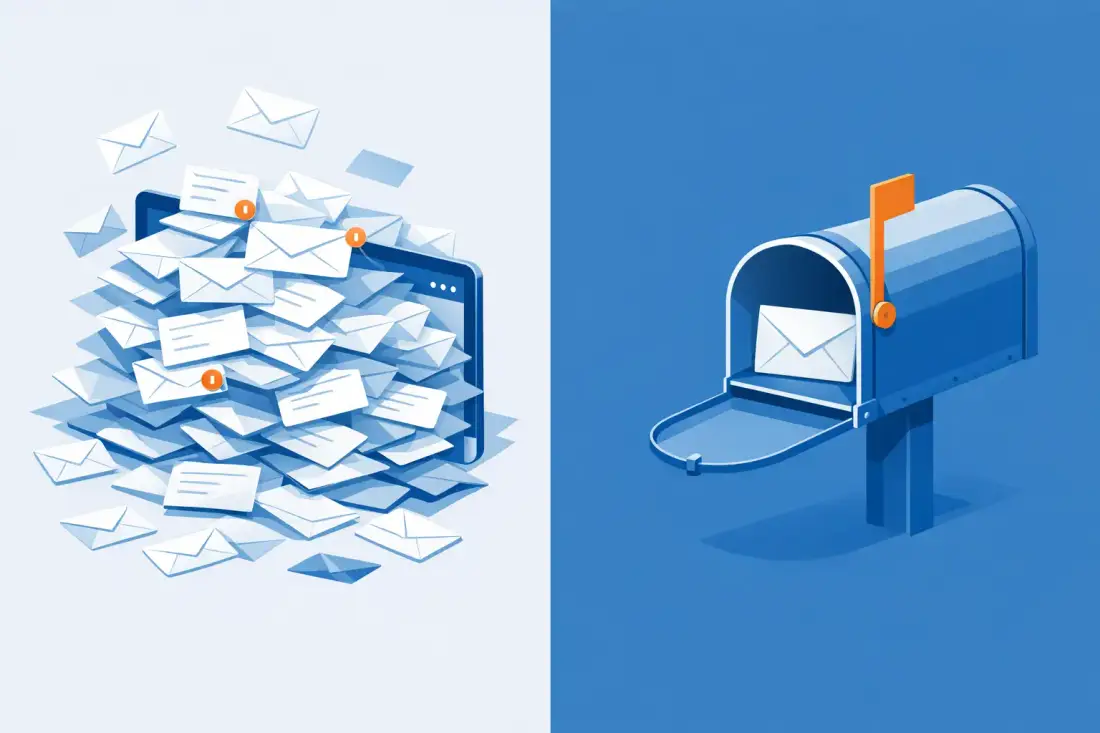
Email volume is enormous, and the inbox is still where a lot of work starts.
Microsoft's 2025 Work Trend Index found that the average worker receives 117 emails per day, with many messages skimmed in under a minute.
The practical takeaway for B2B teams:
- even “good” cold email competes in a flooded inbox
- filters and prioritization systems keep getting stricter
- AI makes it easier to produce more messages, not better outcomes
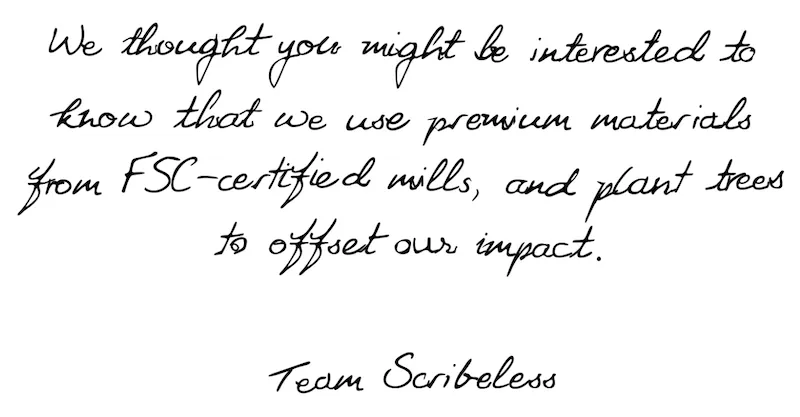
Mail is scarce by comparison, which is why it can win attention—especially when it’s handwritten and clearly personal.
Evidence worth citing (and how to use it responsibly)
When you include “mail outperforms” claims, keep them grounded:
- cite attention/recall studies as evidence of mechanism (not a guarantee of revenue)
- cite response rate benchmarks as directional (targeting and offer quality matter more than averages)
Two commonly referenced sources:
- Canada Post neuromarketing/engagement research (attention, recall, processing): https://www.canadapost-postescanada.ca/cpc/doc/en/dm/neuro/connectivity_whitepaper_en.pdf
- ANA Response Rate Report, 2023 (benchmark context for response rates): https://www.ana.net/miccontent/show/id/rr-2024-02-ana-response-rate-report-2023
If you want the “why handwritten” framing, see: The ultimate guide to handwritten marketing.
Response rates: compare fairly (or don’t compare)
“Direct mail response rate” and “email response rate” are often compared unfairly.
To compare channels honestly, align:
- audience quality (ICP fit)
- list size
- stage (cold vs warm vs late-stage)
- offer type
- attribution window
In B2B, the more useful question is: Where is each channel most incremental?
Email is often incremental for:
- fast follow-up and nurture
- pushing resources and links
Mail is often incremental for:
- getting noticed at high-value accounts
- restarting stalled conversations
- executive sponsor touches
The real win: use mail to make email work harder (3 patterns)
Pattern 1: mail as the “pattern interrupt”
- send a short handwritten note
- follow up by email referencing it (“did it land?”)
Pattern 2: mail as “proof of effort” in late stage
- send an exec sponsor letter (short, specific)
- email follows with a one-page plan or summary
Pattern 3: mail as “event follow-up multiplier”
- mail after the event conversation
- email follow-up to schedule next step
If you want multi-touch cadence examples, see: Using Direct Mail with Multi-Touch Campaigns & Optimizing ABM Cadence.
Measurement: don’t trap yourself in last-click thinking
Email is easy to attribute because it’s inherently online.
Mail can also be measured—if you design for it:
- trackable URLs/QR codes
- matchbacks to CRM outcomes
- holdout tests for lift
Start with: How to track direct mail marketing campaigns.
If you want the full measurement stack (QR, PURLs, matchbacks, holdouts), see: Direct Mail Attribution for B2B.
A practical decision framework (email, print, handwritten, hybrid)
If you’re choosing a format for a specific motion, use:
- list size (how many?)
- deal value (is it worth it?)
- intent (why now?)
- personalization depth (can you be specific?)
We’ve put the full “format selector” into a dedicated guide: Printed vs Handwritten vs Hybrid: The 3‑Tier Format Selector for B2B.
Conclusion
Email isn’t “dead,” and direct mail isn’t “magic.”
But in a world of infinite inbox noise, scarcity matters.
The teams that win in 2026 will combine both:
- email for speed and iteration
- mail for attention and memorability
- measurement that focuses on pipeline, not vanity metrics
Want help building a measurable multi-touch outbound motion (mail + email)? Book a campaign consult