Introduction: start with the job
Direct mail can do several jobs.
You might need a postcard that explains an offer in three seconds. You might need a handwritten note that makes a key account feel personally chosen. You might need a printed piece with product imagery, pricing context, and a QR code. You might need a hybrid piece that combines handwritten and printed elements in the same mailer.
So the format decision should start with the job the mail has to do.
Ask what kind of attention, trust, and response the moment needs. If the answer is not obvious, test it.
Scribeless can help with all of it: handwritten mail, printed direct mail, postcards, folded cards, QR tracking, integrations, programmatic workflows, and analytics.
Hybrid mail blends handwritten and printed elements in the same piece: a handwritten message with a printed graphic on the back, a designed postcard with a handwritten address, or a printed insert paired with a handwritten note.
Six questions before you choose a format
Use these questions before choosing the format:
1) How hard is this person to reach?
If your recipient is overloaded with email, ads, LinkedIn messages, vendor calls, and internal priorities, the format has to earn attention before the message can work.
Handwritten mail earns its place when attention is scarce: executives, high-value prospects, VIP customers, donors, partners, referrals, renewal stakeholders, and people who already ignore your digital channels.
Printed mail and postcards can still work for hard-to-reach audiences, especially when the offer is visual or the audience is broad. But if the recipient needs to feel selected, not targeted, handwriting can carry more weight.
2) What is the value of winning or retaining them?
Think in campaign economics:
- annual contract value
- lifetime value
- repeat purchase potential
- donation value
- referral value
- renewal or expansion value
- cost of losing the relationship
When one conversion is worth a lot, a more personal format can make sense at higher volume. Thousands or tens of thousands of handwritten pieces can be a good decision when the segment is valuable, the timing is relevant, and the expected lift justifies the spend.
3) What stage is the relationship in?
Match the format to the relationship:
- cold audience with simple offer: postcard or printed direct mail
- known account with meaningful context: handwritten note or letter
- recent event, demo, purchase, renewal, referral, or donation: handwritten note or folded card
- complex offer or proof-heavy message: printed direct mail
- personal message that still needs design, imagery, or offer space: hybrid
High-trust asks deserve a format that feels considered.
4) What does your brand promise?
Some brands win because they feel human, premium, personal, local, expert, or relationship-led.
If your brand philosophy is built around real people and human connection, handwritten mail may be more than a response tactic. It can be a physical expression of the brand.
If your brand is more offer-led, product-led, or information-heavy, a postcard or printed piece may make the offer clearer. If you need both warmth and explanation, use a hybrid format.
5) How much space does the message need?
A short thank-you, follow-up, referral ask, or executive note does not need a full printed pack.
A product comparison, event invitation, pricing explanation, QR-led promotion, or multi-benefit offer may need more visual structure.
Give the recipient enough context to act without making the piece feel cluttered.
6) How will you measure it?
Format selection should include measurement from the start:
- QR codes
- short URLs or personalized URLs
- campaign-specific phone numbers
- CRM campaign fields
- matchbacks
- holdout groups
- follow-up tasks after scans or replies
If you cannot confidently choose a format, run a controlled test.
Quick format selector
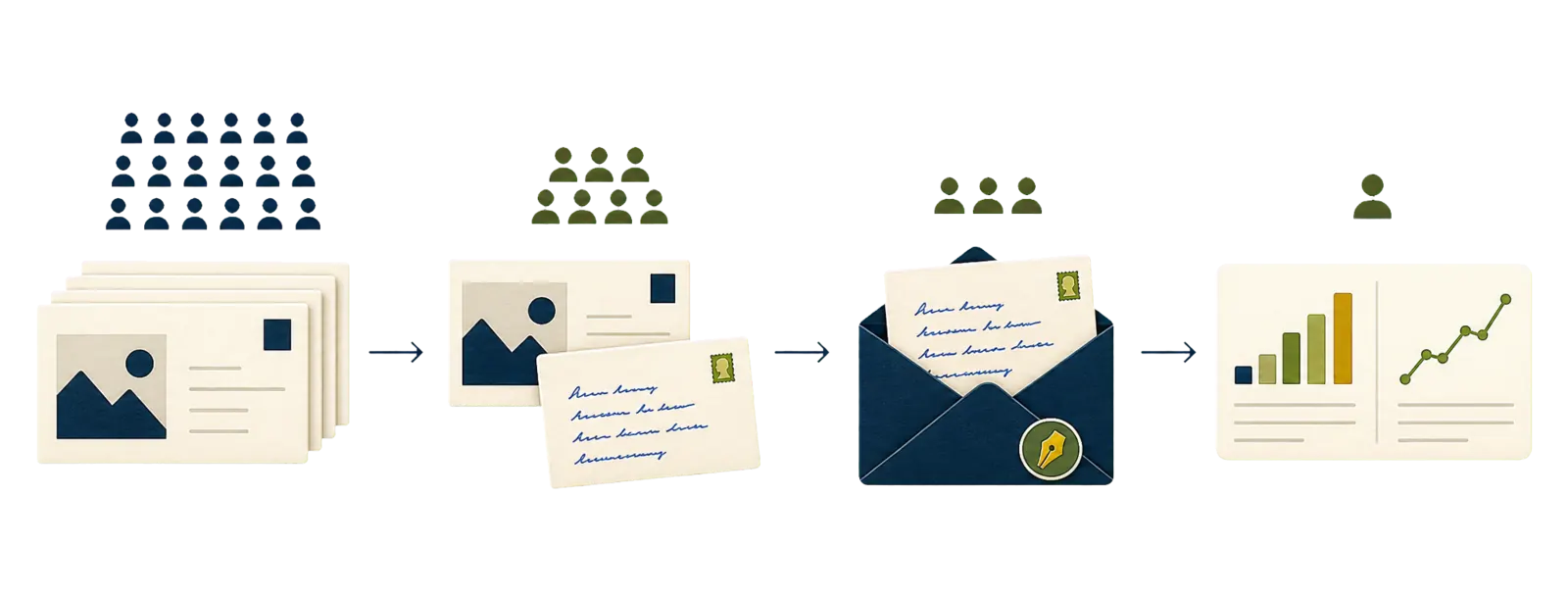
Use this as an initial routing model before choosing the exact mail piece.
Tier 3 (reach): 2,000-100,000+ targets
Format: printed postcards/letters Goal: awareness, familiarity, light response Works when: you have a strong offer and clean targeting
Tier 2 (engage): 200-2,000 targets
Format: hybrid (printed + selective handwritten) Goal: convert engagement into meetings Works when: you only "upgrade" engaged accounts to handwritten
Tier 1 (whales): 20-200 targets
Format: handwritten notes/letters Goal: attention, replies, executive engagement Works when: you tie mail to intent/stage signals
| Situation | Best starting format |
|---|---|
| Broad visual offer, local campaign, event follow-up, or QR-led promotion | Postcard |
| Short personal message after a meeting, purchase, referral, donation, or milestone | Handwritten note |
| Higher-consideration B2B ask, executive message, renewal, or stalled opportunity | Handwritten letter |
| Premium relationship moment, announcement, seasonal campaign, or invitation | Folded card |
| Detailed offer, product imagery, inserts, collateral, or proof-heavy campaign | Printed direct mail |
| Need handwritten warmth plus printed graphics, offer space, or address-side polish | Hybrid direct mail |
Format fit: where each direct mail format earns its place
Handwritten notes
Choose handwritten notes when the recipient should feel personally chosen.
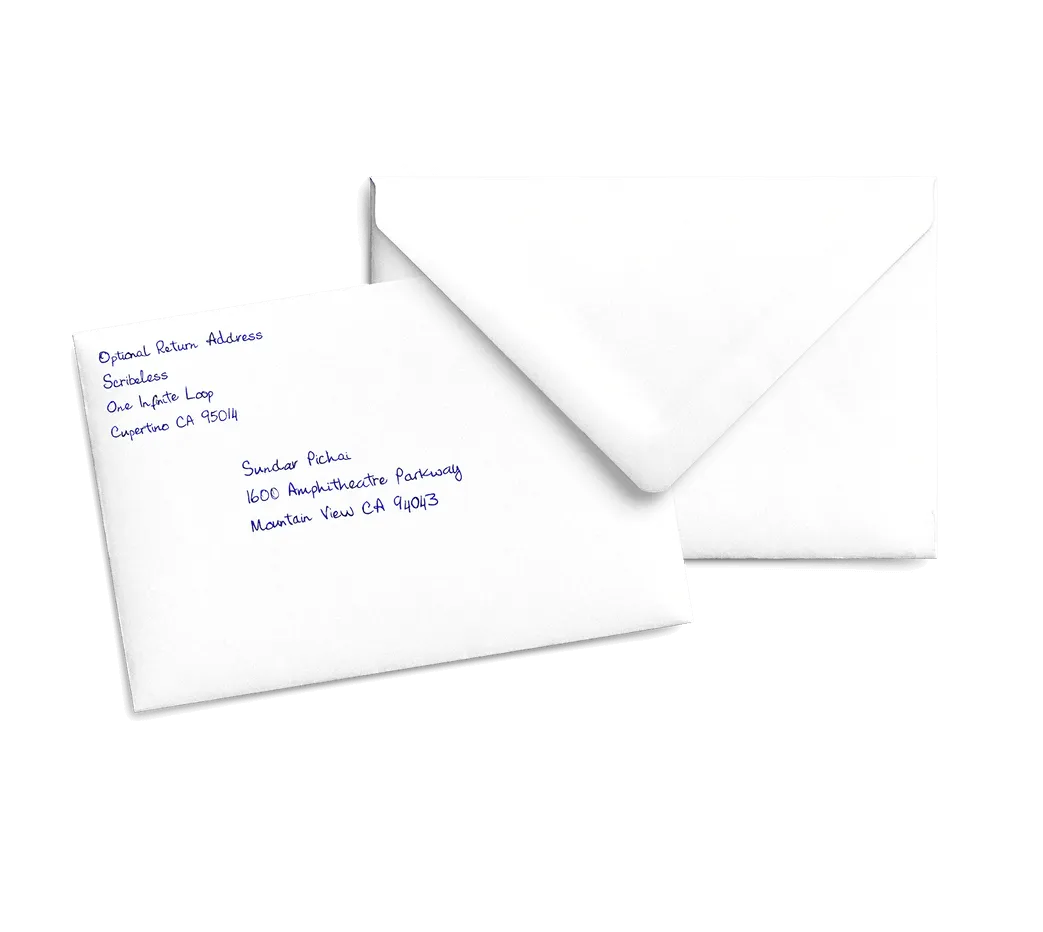
A good handwritten note should feel like personal correspondence: quiet branding, minimal design, and enough specificity that it could plausibly have been written for one person.
Use them for:
- post-demo or post-meeting follow-up
- customer thank-you notes
- referrals and introductions
- donor or supporter appreciation
- VIP retention
- renewal or expansion moments
- win-back and reactivation touches
- high-value eCommerce customers
Handwritten notes are not confined to tiny lists. A note to 20 people can work. A note to 20,000 people can also work when the segment is valuable, the timing is right, and the brand promise supports a human touch.
Handwritten letters
Handwritten letters give you more space, more gravity, and more room for context.
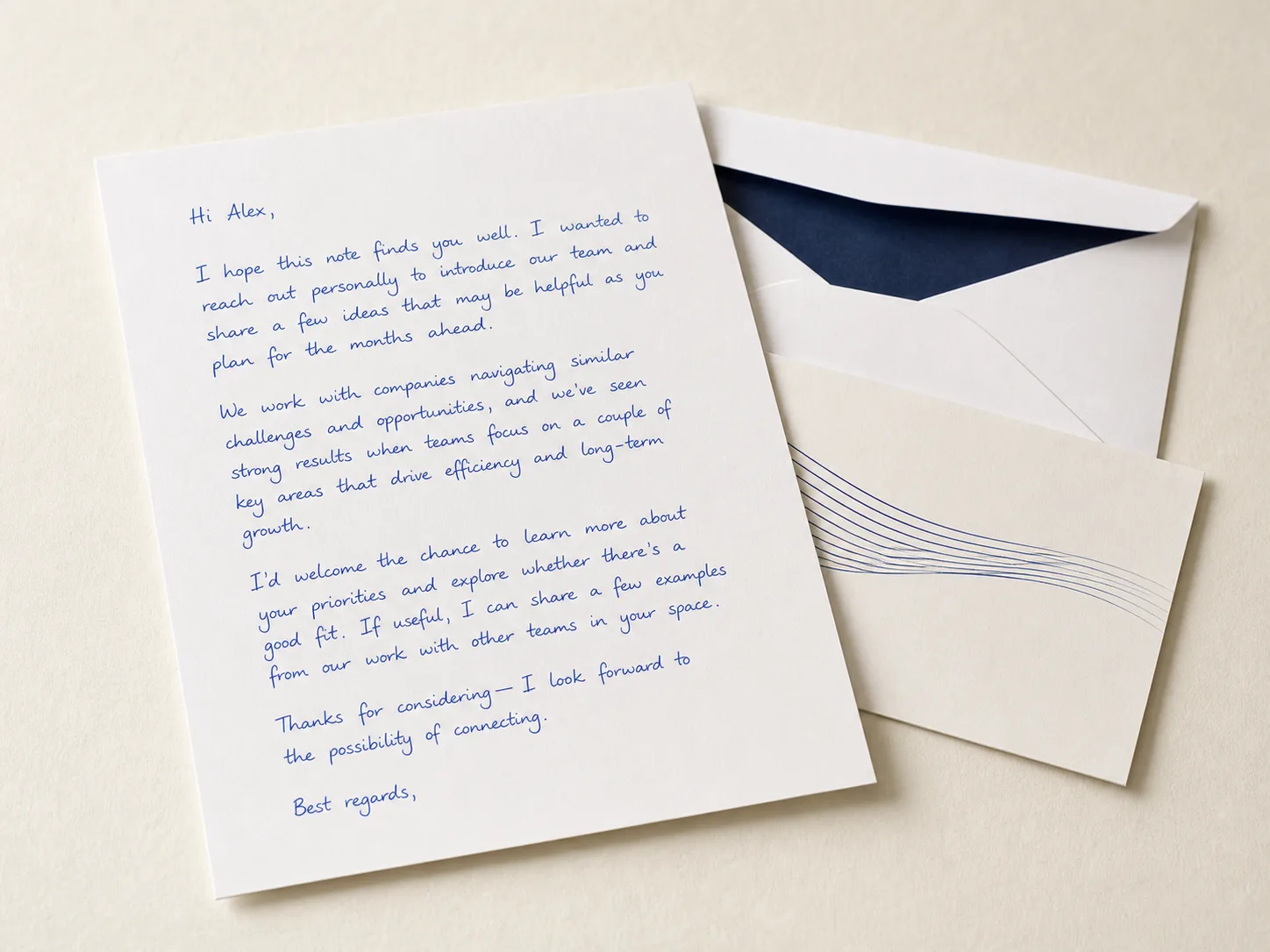
Use them when the ask is more considered:
- ABM outreach to named accounts
- executive-to-executive messages
- late-stage opportunities
- customer success or renewal conversations
- financial services, real estate, fundraising, and other trust-heavy categories
- messages where a short card would feel too light
Use a letter when the recipient needs to understand why you are reaching out, why it matters now, and what they should do next.
Postcards
Choose postcards when the message needs to be seen fast.
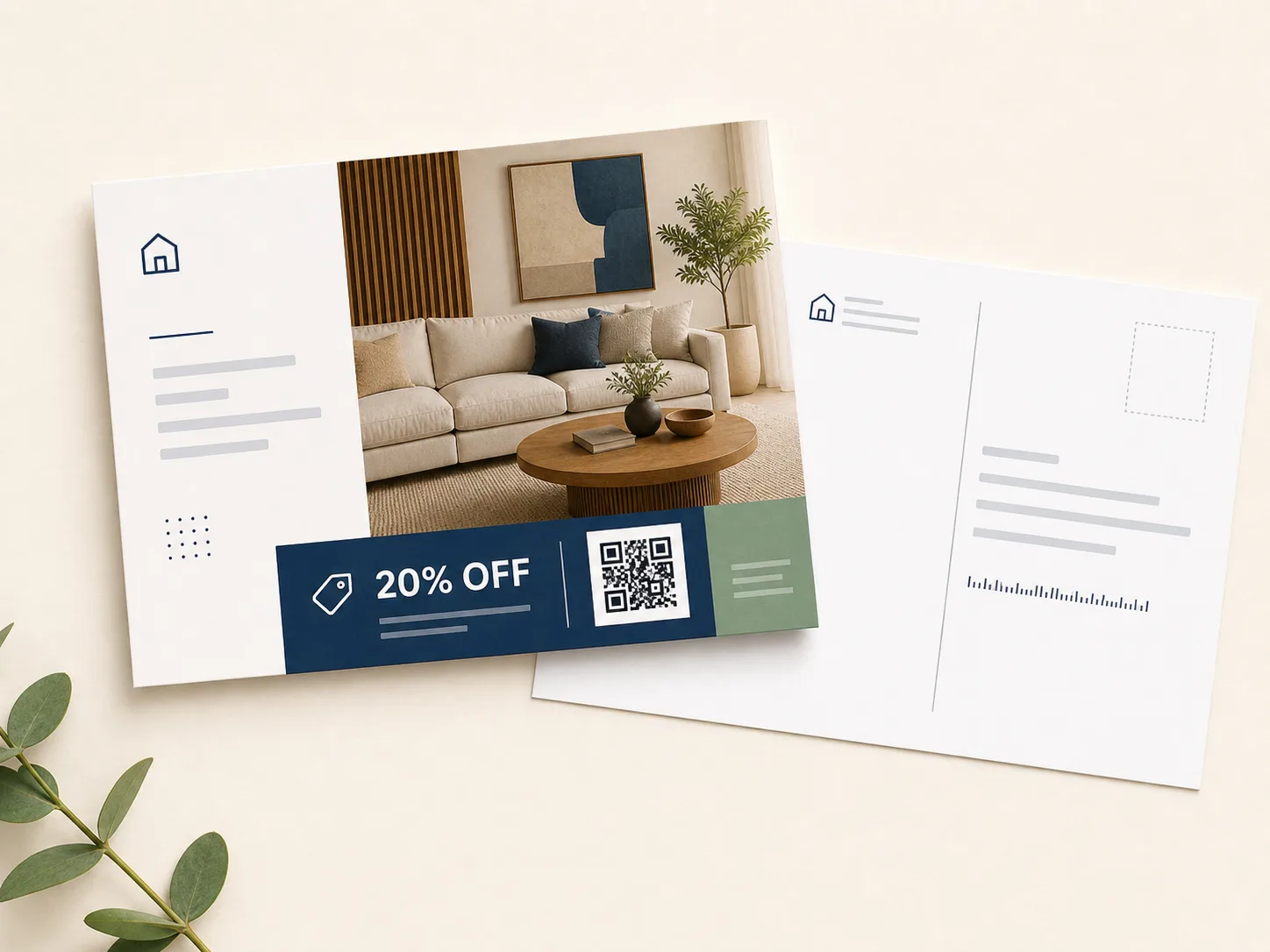
Use them for:
- visual offers
- QR-led campaigns
- local awareness
- event follow-up
- reactivation campaigns
- broad customer or prospect segments
- product imagery or simple benefit-led messaging
Postcards are easy to scan, test, and connect to digital follow-up. They are a good first experiment when the offer is clear and the audience does not need a deeply personal message.
Folded cards
Folded cards sit between a postcard and a letter.
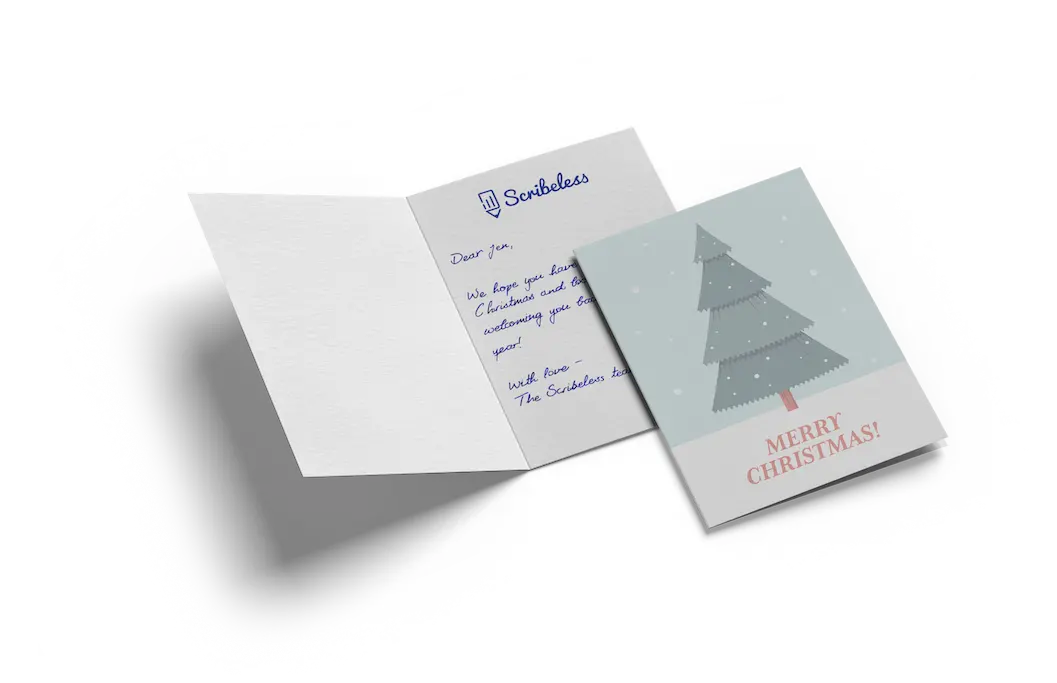
Use them for:
- premium customer moments
- holiday or seasonal campaigns
- invitations
- relationship-led announcements
- personal thank-you messages with more presentation value
- campaigns where the act of opening the card matters
Folded cards make the piece feel more like a gesture than an advert.
Printed direct mail
Choose printed direct mail when design, explanation, or offer structure carries the campaign.
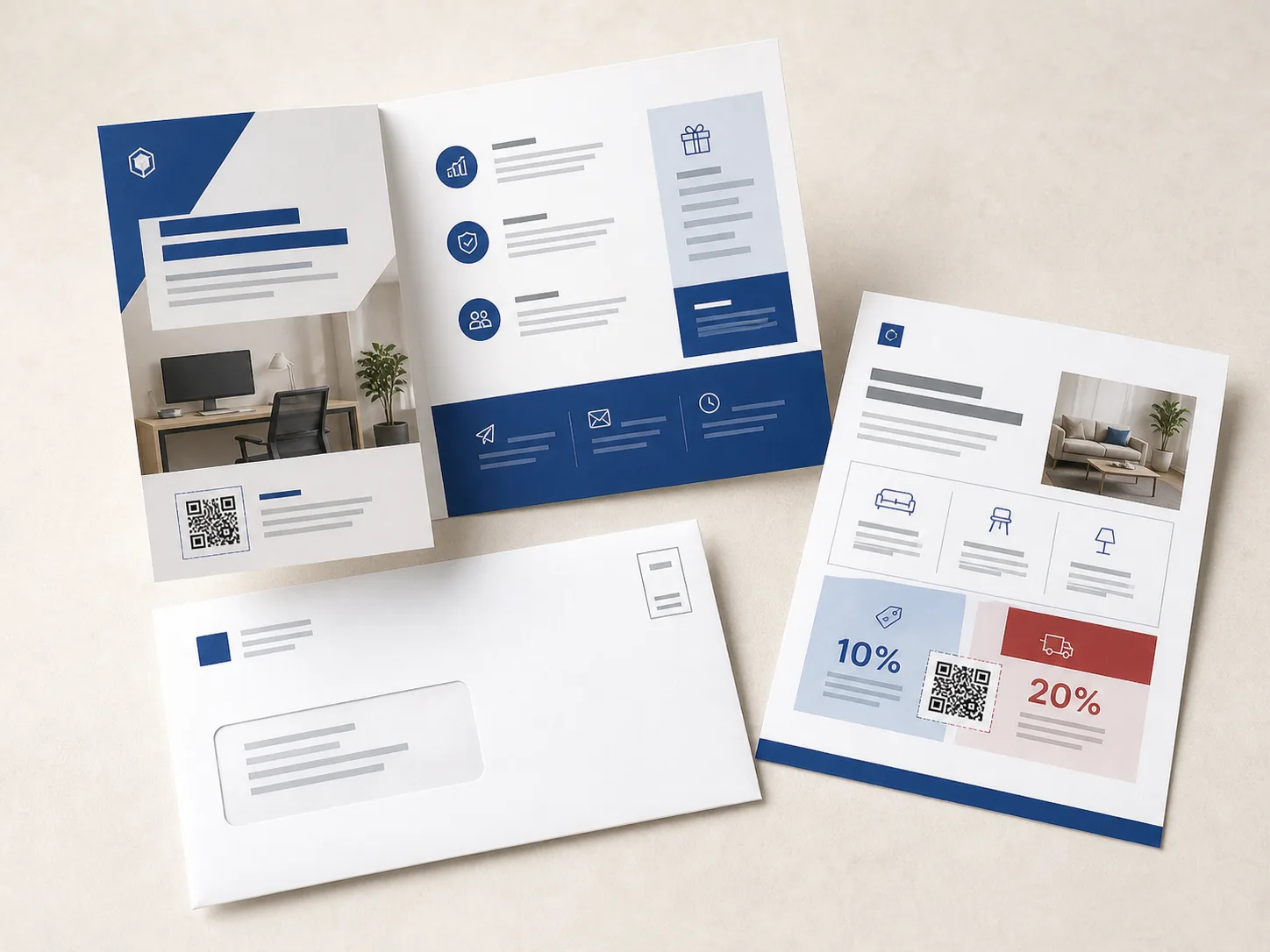
Use it for:
- flyers and inserts
- designed postcards
- printed letters
- product or service explainers
- QR-led offers
- multi-benefit campaigns
- collateral sent before or after a sales conversation
- broad campaigns where creative clarity matters
Printed mail can still feel thoughtful. It is the right option when visual hierarchy, offer clarity, imagery, or cost-efficient testing carries the message.
Hybrid mail combines handwriting and print
Hybrid direct mail uses handwritten and printed elements together in the same mailer.
Hybrid can look like marketing mail. The brand, offer, graphics, QR code, and response path stay visible. Handwriting adds warmth, attention, or specificity without asking the whole piece to pass as a personal note.
Hybrid gives you both in one piece:
- handwritten message on the front, printed offer or graphic on the back
- handwritten card with a printed QR code and landing page CTA
- designed postcard with handwritten address treatment
- printed insert or product sheet paired with a handwritten note
- folded card with printed brand artwork and handwritten interior message
Use handwriting where it adds attention, trust, or emotional weight. Use print where the recipient needs visual structure, product proof, brand consistency, or a clearer offer.
Scribeless supports every format in the workflow
Scribeless started with handwritten mail. Today, the platform supports broader direct mail workflows across handwritten, printed, postcard, card, and hybrid mail pieces.
That breadth matters when you are still learning what works. You can choose a format, test alternatives, automate the workflow, and measure the result without moving between disconnected vendors.
With Scribeless, teams can:
- build handwritten and printed templates
- add QR codes and trackable calls to action
- use CRM, eCommerce, warehouse, and automation data to trigger sends
- run one-off campaigns or recurring workflows
- connect QR scan activity to follow-up actions
- compare campaign performance across formats
For the operational layer behind this, see Programmatic Direct Mail. For the full format overview, see Handwritten Direct Mail Services for Business.
If the answer is unclear, run a format experiment
Format debates get expensive when they stay theoretical. Run a controlled test instead.
A practical format experiment usually needs a meaningful sample size. As a rule of thumb, start with at least 1,000 recipients per test cell where possible, especially if the expected response rate is modest.
Example test:
| Test cell | Format | Audience |
|---|---|---|
| A | Postcard | 1,000 matched recipients |
| B | Handwritten note | 1,000 matched recipients |
| C | Printed or hybrid mail piece | 1,000 matched recipients |
| Holdout | No mail | Matched control group |
Choose one primary KPI before sending:
- meetings booked
- QR scans
- form completions
- purchases
- renewals saved
- donations
- reply rate
- pipeline created
- revenue or LTV lift
Then use supporting signals to understand why one format worked:
- scan timing
- landing page conversion
- CRM stage movement
- sales follow-up outcomes
- customer cohort performance
- matchback results
Scribeless is useful here because the same platform can run the formats, attach QR tracking, connect the data back to your systems, and show results in the analytics dashboard.
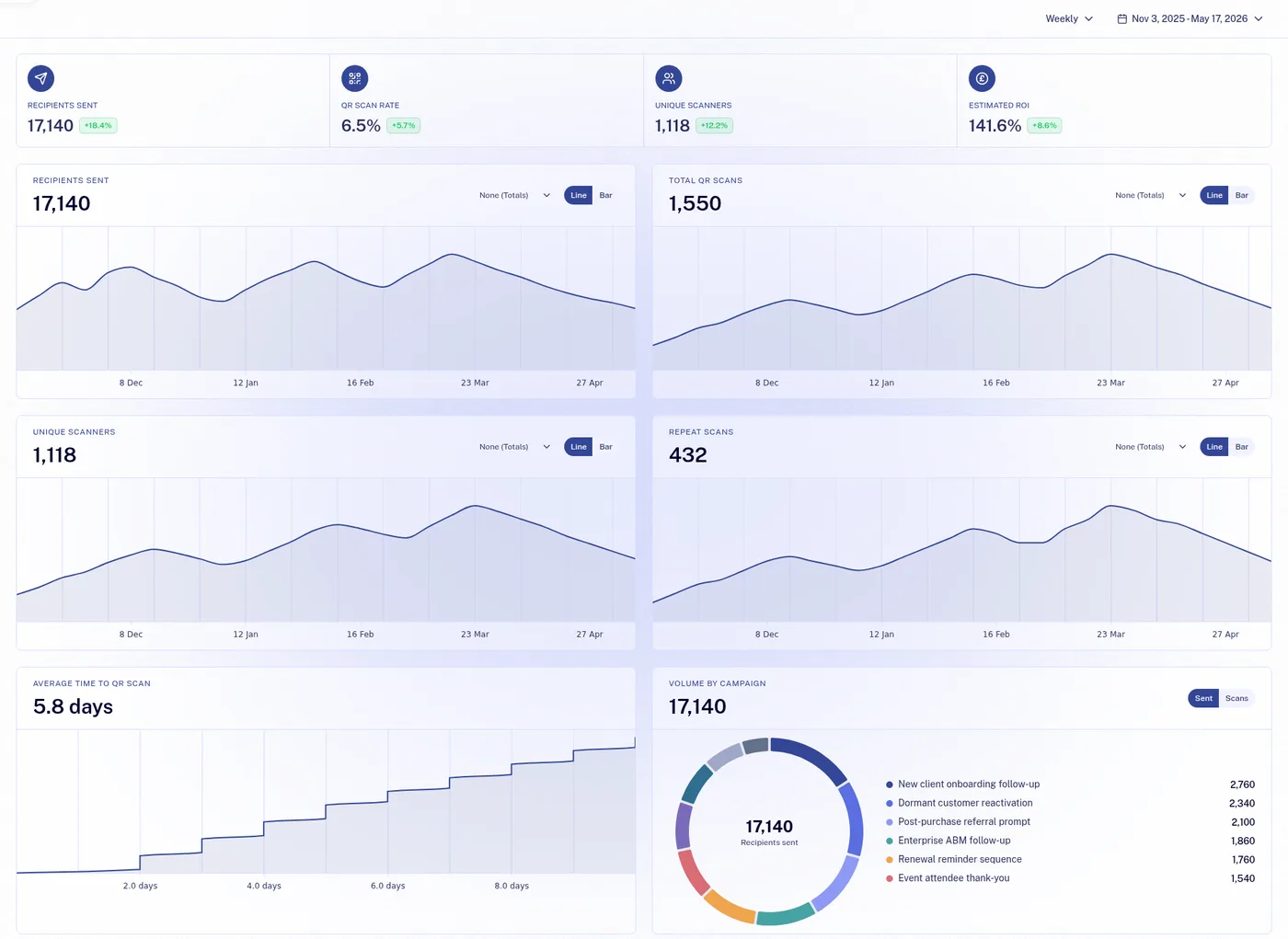
For measurement mechanics, start with How to track direct mail marketing campaigns.
Cost-to-impact: how to think about ROI
Cost per piece is only the starting point.
Compare the options by:
- cost per qualified response
- cost per meeting
- cost per opportunity
- cost per retained customer
- cost per incremental purchase
- cost per donation
- cost per revenue lift
A cheap send gets expensive when it fails to earn attention. A higher-cost send can be efficient when it reaches people who usually ignore you.
Judge the format by incremental result: response, meetings, revenue, retained customers, or whatever KPI the campaign was built to move.
For more on cost drivers, see The biggest direct mail marketing costs and how to control them.
Conclusion
There is no single scale ladder for direct mail formats.
Postcards, handwritten notes, letters, folded cards, printed pieces, and hybrid mailers all have a place. The job is to match the format to the audience, the message, and the next action.
The right format depends on how difficult the recipient is to reach, how valuable the relationship is, what your brand needs to signal, how much context the message needs, and how you will measure the result.
Choose with intent. Test when the answer is unclear.
Want help choosing or testing handwritten, printed, postcard, folded card, or hybrid mail? Book a campaign consult.