In real estate, the agents who dominate their markets are rarely the ones casting the widest net. They're the ones who go deep rather than broad, becoming the undisputed experts in a specific geographic area. This approach has a name: geo farming.
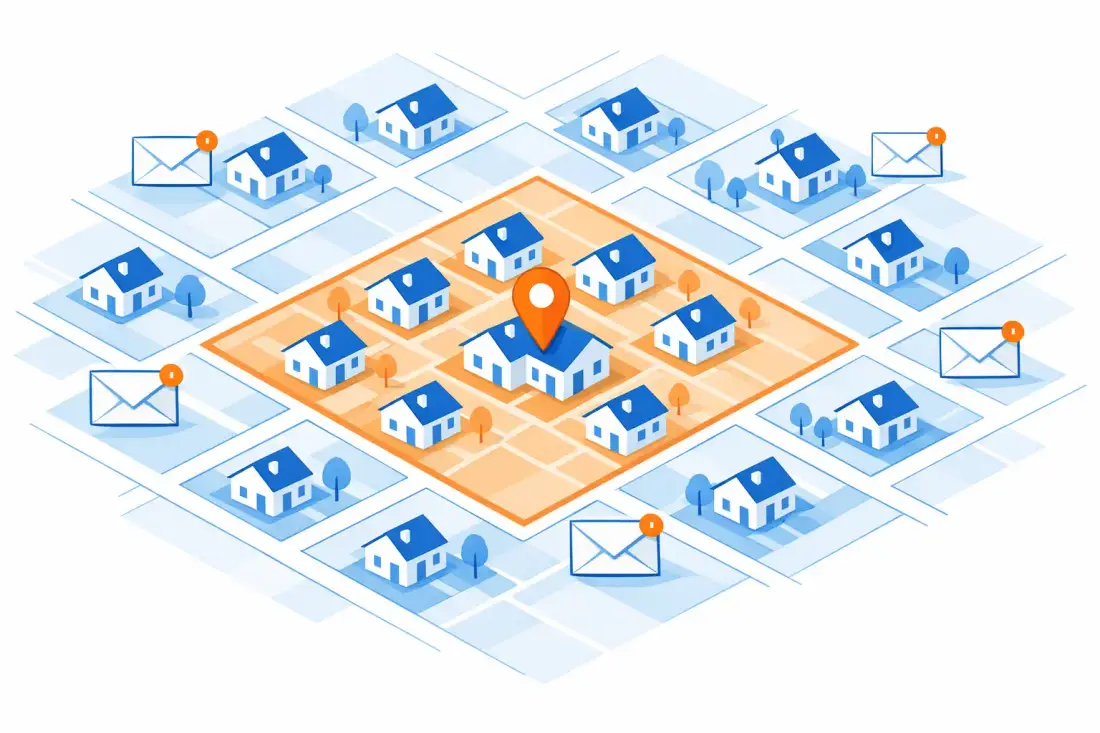
Geo farming is the practice of concentrating your marketing efforts on a defined geographic area to establish yourself as the go-to agent for that community. Rather than competing for attention across an entire city or region, you focus your resources on building recognition, trust, and expertise within a specific neighborhood or ZIP code.
The math is simple. When a homeowner in your farm area thinks about selling, you want to be the first name that comes to mind. And when their neighbors need a recommendation, you want your name on their lips. That kind of recognition doesn't happen by accident. It's built through consistent, strategic outreach over time.
Why Geo Farming Works
Real estate has always been a local business, but geo farming takes that principle to its logical conclusion. Here's why this strategy continues to deliver results for agents who commit to it:
Builds Community Recognition
Consistent presence in a defined area creates familiarity. When residents see your name regularly, whether through handwritten notes, local event sponsorships, or just-sold postcards, you transition from stranger to familiar face. That familiarity breeds trust, and trust wins listings.
Maximizes Marketing ROI
Spreading your marketing budget across an entire metro area dilutes its impact. Concentrating those same resources on 500-1,000 homes means each household receives more touchpoints throughout the year. Higher frequency leads to better recall, and better recall leads to more business.
Establishes You as the Neighborhood Expert
When you focus on one area, you naturally develop deep knowledge of its dynamics: recent sales prices, days on market, buyer demographics, school catchment areas, upcoming developments, and neighborhood history. This expertise shows in your conversations and marketing, setting you apart from generalist agents.
Creates Referral Networks
Homeowners talk to their neighbors. When you successfully help one family in your farm area, word spreads. Over time, you're not just marketing to individual households but building a network of advocates who refer business your way.
How to Develop Your Geo Farm
Building a successful geo farm requires thoughtful planning before you send a single piece of mail. Here's how to approach it:
Choose Your Location Strategically
The area you select will determine your success more than any other factor. Look for neighborhoods with these characteristics:
- Healthy turnover rates: Target areas where 5-8% of homes sell annually. Too low and you'll wait forever for opportunities; too high and you're competing with too many other active agents.
- Manageable size: Start with 300-500 homes. You can expand once you've established dominance, but starting too large stretches your resources thin.
- Low agent penetration: Research who else is farming the area. Unseating an established agent is possible but requires significantly more investment.
- Alignment with your expertise: If you specialize in luxury properties, farm a luxury neighborhood. If you work with first-time buyers, target areas with starter homes.
- Personal connection: Having some tie to the area, whether you live there, grew up there, or have successfully sold there, gives you authentic talking points.
Study the Community
Before you can market to a neighborhood, you need to understand it. Research:
- Average home values and price trends over the past 3-5 years
- Typical days on market for recent sales
- Demographics of current homeowners (age, family status, length of residence)
- Local amenities, schools, parks, and community organizations
- Any planned developments or zoning changes that could affect property values
This knowledge will inform both your messaging and your ability to have meaningful conversations with residents.
Plan Your Budget Realistically
Geo farming is a long-term investment. Most agents need 12-18 months of consistent effort before seeing significant returns. Budget accordingly:
- Mail costs: Plan for monthly or bi-monthly mailings to every home in your farm. Handwritten direct mail costs more per piece than printed postcards, so it’s best used selectively (or as the “conversion layer” in a hybrid program).
- Event sponsorships: Local sports teams, school events, and community gatherings offer visibility opportunities.
- Online advertising: Geotargeted Facebook and Google ads can reinforce your physical mail presence.
- Time investment: Factor in hours for door-knocking, attending events, and staying current on local market data.
Budget ranges widely by market, print quality, postage, and cadence. Start with a small test neighborhood, track cost per conversation/valuation, and scale what proves out.
Create Genuine Value
The agents who win at geo farming don't just market to their areas. They provide genuine value that makes residents want to hear from them. Consider:
- Market updates: Share hyperlocal data that homeowners can't easily find elsewhere. What sold last month, for how much, and how quickly?
- Home maintenance tips: Seasonal checklists and improvement suggestions help homeowners protect their investments.
- Community news: New restaurants, upcoming events, school district updates, all the information neighbors share over the fence.
- Free resources: Home valuation reports, buyer seminar invitations, or neighborhood guides for residents expecting visitors.
The goal is to make your communications something residents look forward to rather than toss in the recycling.
Geo Farming Tips and Tactics
Once you've established your farm area and begun your outreach, these strategies will help you build momentum:
Prioritize Consistency Over Volume
One annual mailer won't build recognition. Neither will three months of intensive outreach followed by six months of silence. The agents who dominate their farm areas show up consistently, month after month, year after year. A modest but reliable presence beats sporadic bursts of activity every time.
Use Multiple Channels
While direct mail remains the backbone of successful farming, reinforcing your message across channels amplifies its impact:
- Social media: Create hyperlocal content for your farm area. Facebook groups for the neighborhood, Instagram highlights of local spots, and market update videos all build online presence.
- Door-knocking: Face-to-face conversations build relationships that mail alone cannot. Even brief doorstep chats make you memorable.
- Community events: Sponsor the little league team, host a neighborhood cleanup, or set up a table at the farmers market. Physical presence reinforces your commitment to the area.
Track Everything
What gets measured gets improved. Track:
- Response rates from different mail pieces
- Where your listings and closed transactions originate
- Which households engage with your content
- Seasonal patterns in response and engagement
This data will help you refine your approach over time and demonstrate ROI when you question whether the investment is worthwhile.
Make Your Outreach Personal
Generic postcards get generic results. The more personal your communications, the more they resonate. This is why handwritten notes outperform printed mail so dramatically. A handwritten envelope gets opened; a glossy postcard often doesn't make it past the mailbox.
With Scribeless, you can send authentic handwritten notes at scale—so your outreach still feels genuinely personal even when you’re reaching hundreds of homes.
Engage With Video Content
Video allows you to show your personality in ways that written content cannot. Consider creating:
- Monthly market update videos for your farm area
- Walking tours of the neighborhood highlighting local amenities
- Interview-style conversations with local business owners
- Just-listed and just-sold property videos
You don't need professional production value. Authentic, helpful content shot on a smartphone often performs better than polished productions that feel like advertisements.
Send Valuable Newsletters
A regular newsletter positions you as a source of useful information rather than just another agent asking for business. Include:
- Recent sales in the neighborhood with prices and days on market
- Local event calendars
- Home improvement tips relevant to the housing stock in your area
- Profiles of local businesses or community members
- Market trends and what they mean for local homeowners
Monthly newsletters, especially handwritten notes with market updates, keep you top of mind without feeling like sales pitches.
Work Your Leads Systematically
As responses come in, you need a system to manage them. Not every homeowner who engages is ready to sell immediately, but many will be in the next 1-3 years. Create a process to:
- Capture contact information from every interaction
- Note key details (timeline, motivation, property specifics)
- Schedule follow-up touchpoints at appropriate intervals
- Track the progression from cold prospect to active listing
The fortune in real estate is in the follow-up. A systematic approach ensures no potential listing slips through the cracks.
The Long Game
Geo farming isn't a quick-win strategy. It's a commitment to building lasting dominance in a defined market. The agents who succeed understand this and approach it with patience and persistence.
Your first few months may feel unrewarding. You're investing time and money with little immediate return. But as you pass the 12-18 month mark, something shifts. Homeowners start recognizing your name. They mention seeing your letters. They call when they're thinking about selling because you're the only agent they know in the area.
At that point, you've transformed from just another real estate agent into the neighborhood expert. Listings come more easily. Referrals multiply. And your marketing investment starts generating the returns you envisioned.
The question isn't whether geo farming works. It's whether you're willing to commit to the consistent effort required to make it work for you.
Ready to build lasting recognition in your farm area? Request a free Scribeless sample to see how handwritten direct mail can transform your farming strategy, or speak to our team about automating your outreach.
FAQs About Geo Farming in Real Estate
Why is location so important in geo farming?
The success of a geo farming campaign depends heavily on choosing the right area. You need a neighborhood with sufficient turnover to generate opportunities, but not so much activity that you're competing with multiple established agents. The area should also align with your expertise and, ideally, have some personal connection you can leverage in your messaging. A strategic location choice maximizes your return on the time and money you invest.
How is geo farming different from geofencing?
While both strategies involve geographic targeting, they work quite differently. Geo farming is primarily a physical marketing strategy focused on building long-term recognition through direct mail, door-knocking, and community presence. Geofencing is a digital advertising technique that delivers ads to mobile devices within a defined geographic boundary. Many successful agents use both: geo farming to build foundational awareness and geofencing to reinforce their message through digital channels.
How long does it take to see results from geo farming?
Most agents need 12-18 months of consistent effort before seeing significant returns from geo farming. The strategy works by building cumulative recognition over time, so early months often feel like you're investing without reward. However, once you've established recognition, the business tends to compound. Patient agents who commit to the long game typically find geo farming becomes their most reliable source of listings.
What's the most effective mail piece for geo farming?
Handwritten notes often outperform other mail formats for farming campaigns. They’re more likely to get opened, read, and remembered than printed postcards or letters because they look like personal correspondence—not bulk advertising. The personal touch of handwriting creates an emotional connection that mass-produced materials struggle to match.
How often should I mail to my farm area?
Monthly contact is the standard cadence for most successful farming campaigns. This frequency keeps you top of mind without overwhelming residents. Some agents increase frequency during peak seasons (spring and fall) and scale back slightly during slower periods. The key is consistency: sporadic mailings don't build the cumulative recognition that makes geo farming effective. Whatever cadence you choose, maintain it reliably over time.