Introduction
Real estate agents already understand the value of handwritten notes. Many agents write to their sphere after passing the real estate exam, send handwritten thank you notes after a closing, or mark the anniversary of a client's purchase.
The problem is consistency. Handwritten outreach is easy to do for five people and hard to maintain across a large sphere, past-client list, or geographic farm. Tracking is another gap. If someone responds three weeks later, you need to know which campaign, message, and audience segment created the opportunity.
That is where modern direct mail can help. Keep the handwritten feel, but add targeting, automation, and measurement.

The tangible benefits of direct mail
Handwritten mail feels different from a flyer. It is slower, more deliberate, and more likely to be read before it is thrown away. For real estate, that matters because trust is built over months or years, not in one lead form.
A good note can support several real estate moments:
- thanking a buyer or seller after closing
- checking in before a home anniversary
- following up after a valuation request
- introducing yourself to a farm area
- congratulating a homeowner after a nearby sale
- reactivating a past client before a referral push
The format only helps if the message earns the attention. A short, specific note usually beats a glossy mailer full of claims.
The limitations of traditional mailing
If handwritten correspondence is so effective, why don't more real estate professionals do it consistently? Two common barriers:
Lack of tracking and ROI measurement
When you send a card or letter to someone in your sphere, you may never know whether it influenced a reply, valuation request, or referral. Without campaign data, it is hard to compare one message, list, or farm area with another.
Scaling challenges
Writing notes by hand takes time. It is manageable for a small client list, but it becomes difficult when you want to reach hundreds of homeowners around a listing, past clients before a seasonal campaign, or long-term prospects who are not ready to move yet.
Many agents solve the volume problem by switching to printed postcards. That solves production, but it often loses the reason handwritten notes worked in the first place.
How to make direct mail work harder for real estate
For a larger sphere or geographic farm, the goal is to keep the note personal while making the system repeatable.
Make it more efficient
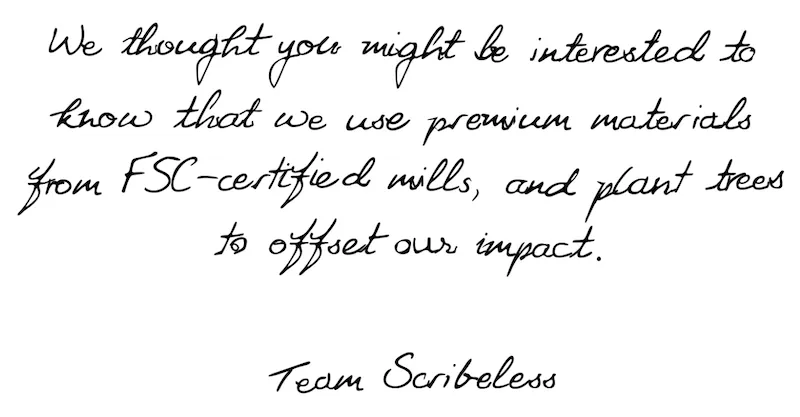
Instead of writing every letter yourself, use automation for production while keeping control over the message. Scribeless uses robotic pens with real ballpoint ink, so notes can keep the look and feel of handwritten correspondence without becoming a weekend admin task.
That lets you send a thank-you campaign, farm-area introduction, or listing-neighbor follow-up without rebuilding the process each time.
Make it more comprehensive
The most effective real estate letters sound like they came from the agent, not a template library. Mention the neighborhood, the recent sale, the homeowner's likely question, or the reason you are reaching out now.
Keep the copy focused. One useful observation and one next step is enough.
Make it trackable
To manage budget, you need to know what is working. Trackable QR codes and custom URLs can show which recipients visit a valuation page, booking form, listing preview, or local market update.
That data gives the agent a better follow-up signal than a cold call list. It also helps compare campaign routes by neighborhood, source, and offer.
Make it more targeted
Each campaign should make the next one sharper. Track which farm areas, property types, owner segments, and messages get replies or scans. Then adjust the list instead of sending the same postcard to everyone.
This approach to finding seller leads turns direct mail into a learning system. The first send gives you a baseline. The second send should be more selective.
Keep the personal touch
Every envelope can be handwritten and sent with a real first-class stamp. That helps the piece avoid looking like another mass-mailed advertisement. It gives your message a better chance than generic advertising methods, especially when the copy is local and specific.
The Scribeless approach
Agents should spend their time with clients, prospects, and referral sources. Scribeless helps handle the production layer while giving teams the tracking and automation needed to improve campaigns over time.
Handwritten correspondence remains useful for a sphere of influence, geographic farm, or the area around a recent listing. Scribeless makes it easier to send consistently, measure response, and follow up when recipients show intent.
Ready to see the difference? Request a free sample to see the quality for yourself, or speak to the Scribeless team to discuss how handwritten mail can work for your real estate business.